Calendar time depends on the model's complexity and our shop's workload at the time. We work with each client on their delivery needs and set a schedule in the proposal.
Typical shop time by model type
Study and explanatory models: about 1 week. Simple massing or layout models that make a proposal easier to discuss.
Semi-detailed presentation models: about 3–8 weeks. Buildings with site context, roads, landscape and recognizable finishes.
Detailed presentation models: about 8–18 weeks. Refined buildings and landscape, display bases and cases, and optional lighting.
Large, complex development models: about 18–30+ weeks. Multi-building projects with many unique structures and extensive detail.
Shop time and calendar time
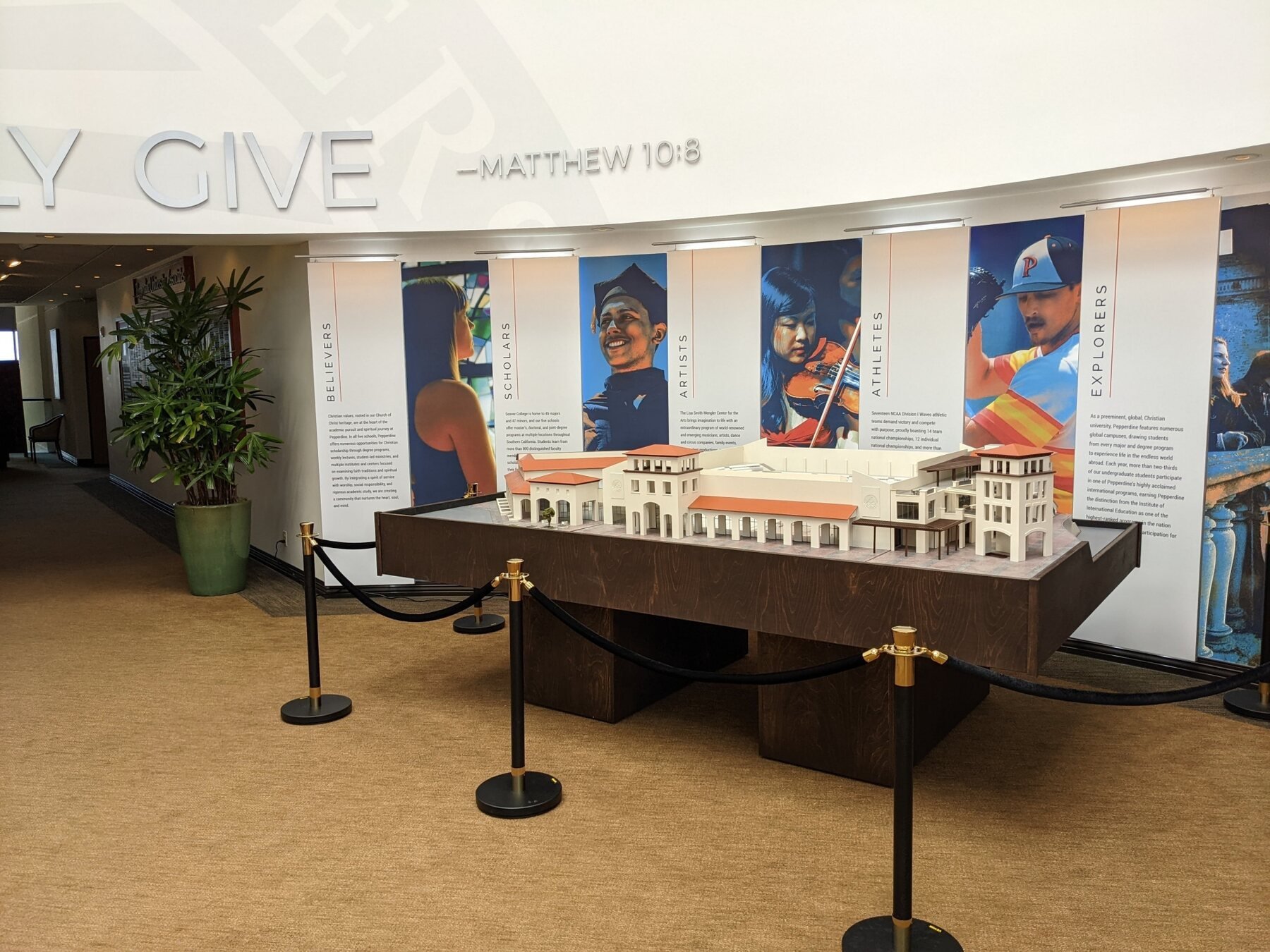
One shop week is one model maker working on your model for a full week. On larger projects, several model makers work at the same time, so a model with many weeks of shop time can be finished in fewer calendar weeks. For example, our 80 × 116 inch Pepperdine campus model, with lighting coordinated to an audiovisual show, was delivered in just over two months to meet a fundraising event.
Calendar time also includes things outside the shop: your team's reviews and approvals, design changes, shipping and installation. We set a practical schedule in the proposal and communicate regularly throughout the build, including photo updates.
What changes the schedule
The level of detail, how complete your source material is, revisions, review periods, the number of model makers we can assign, and shipping or installation needs. If you have a fixed date, such as a trade show, an opening or a hearing, tell us at the start; we plan the work backward from it.
Related: what a custom scale model costs and how a project works.
Common questions
How long does it take to build a custom scale model?
From about 1 week of shop time for a simple study model to 18–30+ weeks for a large, complex development model. Calendar time depends on complexity and the shop's workload; we work with each client on delivery needs.
Does shop time equal calendar time?
No. Shop time is active labor by one model maker. Several people can work on a model at once, which shortens the calendar; reviews, approvals and shipping can lengthen it.
Can you meet a tight deadline?
Often, yes. Our Pepperdine campus model, 80 × 116 inches with presentation lighting, was delivered in just over two months. Tell us your date at the start.
How long does a detailed presentation model take?
About 8–18 weeks of shop time. The calendar schedule depends on staffing, reviews and delivery.
Working toward a date?
Tell us what the model needs to show and when you need it. We'll tell you what's realistic.